
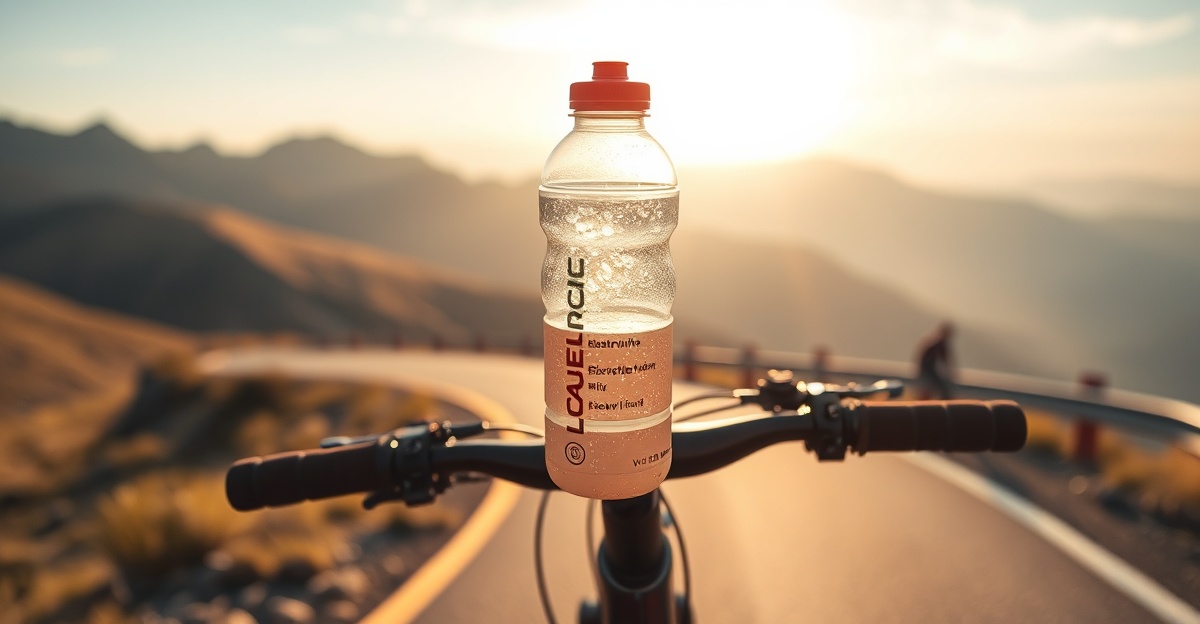
Cyclists occupy a specific nutritional position among endurance athletes. Unlike runners, who typically carry gels and take small sips at aid stations, cyclists can mount two or three 750 ml bottles and drink continuously for three to six hours. That changes the calculus entirely: the drink in those bottles is simultaneously the primary hydration vehicle, the electrolyte delivery system, and (depending on which mix is chosen) a meaningful fraction of the target hourly carbohydrate intake. Choose wrong and the error compounds across every hour of the ride. Choose well and the bottles handle most of the fuelling work without constant gel management. This guide ranks the current field across three categories (hydration-first, balanced, and high-carb) and matches each to the cycling scenarios where it performs best.
Three Categories: The Osmolality Spectrum
The most useful frame for comparing cycling drink mixes is osmolality: the concentration of dissolved particles per unit of fluid. It determines how quickly the gut can absorb liquid and whether the stomach empties efficiently or holds fluid back because the solution is too concentrated.
Hypotonic / Hydration-first (osmolality < 270 mOsm/kg, typically <30g carb per 500 ml bottle): Absorbs faster than plain water. Suitable for hot-weather rides where sweat rate is high and carbohydrates are handled by solid food or gels. These mixes prioritise electrolyte replacement over caloric delivery.
Isotonic / Balanced (270–330 mOsm/kg, roughly 30–60g carb per 500 ml bottle): Matches the osmolality of blood plasma. The gut absorbs it at a moderate rate without the osmotic drag of concentrated solutions. This is the workhorse category, suitable for most training rides and longer sportives where some carbohydrate from the bottle is useful.
Hypertonic / High-carb (>330 mOsm/kg, 60–90g carb per 500 ml bottle): Higher osmolality than plasma means the gut must first draw water inward before absorption begins. Requires a strong gut acclimatisation protocol. Delivers race-level carbohydrate (60–90g/hr) from the bottle alone, eliminating or reducing the need for solid food. The category of choice for criteriums, gran fondos with feed zones, and any effort where reaching into a jersey pocket is impractical.
The three categories are not interchangeable. Using a high-carb mix on a hot recreational ride without adequate acclimatisation is a reliable route to GI distress. Using a hydration-only mix on a four-hour race effort creates a carbohydrate deficit that no amount of gel supplementation can fully rescue at race pace.
Best Hydration-First Mix: Skratch Labs Sport Hydration Mix
Key stats: 20g carbs / 500 ml serving · 380 mg sodium · 0 mg caffeine · $1.00 / serving · $1.50 / 30g carb
Texture & format: Light dissolved drink with a real-sugar sweetness that reads closer to dilute fruit juice than sports drink. Low carb density means no syrupy aftertaste at the bottom of the bottle. One 22 g sachet per 500 ml bottle; the powder disperses quickly. Pairs best with solid food or gels for carbohydrate delivery.
Skratch Labs was built on the premise that real sugar (sucrose, the disaccharide found in fruit) is absorbed differently from maltodextrin because it hydrolyses in the small intestine into equal glucose and fructose, using both the SGLT1 and GLUT5 transport channels simultaneously. The Sport Hydration Mix carries 20g of carbohydrate per 500 ml serving, well below the isotonic threshold, which keeps osmolality low enough to absorb faster than plain water in hot conditions.
The 380 mg of sodium per serving is the product's primary performance lever. Most adults lose 500–1,000 mg of sodium per litre of sweat during moderate-intensity exercise. At a sweat rate of 1 litre per hour, a single Skratch bottle covers 38–76% of that replacement need, enough to maintain plasma sodium without overcorrecting. The formula also contains potassium, magnesium, and calcium in proportions derived from sweat composition research, rather than the arbitrary ratios common in older sports drinks.
Best for: Summer training rides over three hours, hot-weather events, indoor trainer sessions where sweat rate is elevated but the effort is sub-threshold, and any situation where gel-plus-plain-water has been causing GI issues. The low carbohydrate content means solid food or gels must handle the bulk of fuelling. Pair with 1–2 gels per hour for rides over 90 minutes at moderate intensity.
Runner-up: Lekka Hydration. At just 5g carbs and 250 mg sodium per 8g serving, Lekka sits at the extreme low end of the spectrum. It is primarily an electrolyte product that adds minimal sweetness, best suited to rides under 60–90 minutes or as a pre-hydration drink the morning before a long effort. Available at $0.50/serving, it is the lowest-cost entry in this category.
Best Balanced Mix: Tailwind Nutrition Endurance Fuel
Key stats: 25g carbs / 27g serving · 310 mg sodium · 0 mg caffeine · $2.00 / serving · $2.40 / 30g carb
Texture & format: All-in-one drink mix. Mild sweetness, low-osmolality profile. One 27 g packet per 500 ml bottle serves as a complete fueling source for rides under six hours; one bottle equals one fueling source with no gels required at moderate intensity. Available in Mandarin Orange, Lemon, Berry, and Tropical among others. The powder clumps in humidity; store packets sealed and mix fresh.
Tailwind is engineered around a single claim: calories, electrolytes, and hydration in one product, nothing else needed on rides up to six hours. The 25g carbohydrate serving is calibrated below the isotonic threshold, which keeps stomach emptying fast, while still contributing meaningfully to an hourly carbohydrate target of 60g when two bottles are consumed. At 310 mg sodium per serving, it matches or slightly exceeds Skratch's electrolyte delivery, with the addition of potassium, calcium, and magnesium sourced from dextrose and real sugar (not maltodextrin).
The brand's core advantage over GU Hydration and similar electrolyte mixes at a higher carbohydrate level is flavour palatability across extended durations. Multiple surveys of ultra-distance cyclists and bikepacking riders cite Tailwind as one of the few products that does not produce flavour fatigue at six-plus hours, partly because the sweetness level is calibrated to the lower carbohydrate concentration, avoiding the cloying intensity that heavier mixes develop over time.
Best for: All-day training rides, gravel events lasting four to eight hours, bikepacking, and any scenario where the rider wants a single product to handle nutrition and hydration without gel management. At 25g carb per serving, two bottles per hour deliver 50g carbohydrate, which covers the lower end of the recommended 60–90g/hr range for high-intensity efforts and can be supplemented with a single gel per hour at threshold pace.
Runner-up: First Endurance EFS Drink. 25g carbs, 310 mg sodium, and a notably higher amino acid profile than any other product in this category. EFS carries a proprietary blend of L-glutamine, leucine, alanine, and glycine designed to reduce muscle protein breakdown on long efforts. Price is higher at $1.70/serving, but for cyclists targeting six-plus hour endurance blocks, the amino acid supplementation may reduce recovery debt. The EFS Pro variant increases sodium to 620 mg per serving, making it the highest-sodium option in the balanced tier and the appropriate choice for high-sweat-rate riders.
Also notable: GU Energy Labs Hydration Drink Mix. 18g carbs, 320 mg sodium, at $1.80/serving ($3.00/30g carb, the highest per-carb cost in the balanced category). GU Hydration is best understood as a premium electrolyte mix with modest carbohydrate support rather than a full-nutrition drink. It performs well when paired with GU gels, allowing the rider to manage carbohydrate from gels while the drink handles hydration and sodium.
Best High-Carb Mix: Maurten Drink Mix 320
Key stats: 80g carbs (0.8:1 maltodextrin:fructose) · 460 mg sodium · 0 mg caffeine · $4.50 / 165 ml serving · $1.69 / 30g carb
Texture & format: Dissolved in 500 ml, the hydrogel mix produces a slightly thicker mouthfeel than plain water but without the viscosity of a syrup. Flavorless and odorless. The 83 g sachet is single-use; one sachet per standard 500 ml bottle, one bottle per hour at the recommended 80 g/hr target. Mixes opaque-white initially; swirl until clear before capping.
Maurten Drink Mix 320 delivers 80g of carbohydrate per 500 ml bottle, the highest of any hydrogel product on the market and near the upper physiological ceiling for hourly carbohydrate oxidation (approximately 90g/hr in trained athletes using dual-transporter carbohydrate). The hydrogel technology, built on sodium alginate cross-linked with calcium carbonate at gut pH, encapsulates the carbohydrate payload in a gel matrix that bypasses the osmotic drag which would otherwise make an 80g solution acutely hypertonic and a reliable cause of gastric distress.
The practical result for cyclists is that a single 500 ml bottle covers the full hourly carbohydrate target without requiring additional food, gels, or bars. On a four-hour sportive, this translates to fewer feeding operations per hour, which matters when descending at speed or maintaining position in a group. The 460 mg sodium per serving is the highest of any product in the high-carb category and covers the majority of sweat sodium losses for most riders in temperate conditions.
The evidence base for hydrogel technology is strongest in the 80–100g/hr carbohydrate intake range. A 2019 study in the International Journal of Sport Nutrition and Exercise Metabolism found that hydrogel carbohydrate ingestion reduced GI symptom scores by approximately 40% compared to a non-hydrogel maltodextrin-fructose solution at the same carbohydrate concentration. Independent replication has been inconsistent, but Maurten's market penetration among professional cycling teams (INEOS Grenadiers, UAE Team Emirates, Red Bull Bora Hansgrohe) reflects at least coaching-level consensus that the product outperforms standard mixes at high ingestion rates.
Gut acclimatisation requirement: Do not introduce Drink Mix 320 on race day without a minimum of three to four weeks of training at 60+ g/hr from bottles. GI tolerance to high-osmolality carbohydrate loads is trainable, but adaptation takes weeks, not days.
Runner-up: Science in Sport Beta Fuel Drink. 80g carbs (1:0.8 maltodextrin:fructose), 400 mg sodium, $3.75/serving ($1.41/30g carb, 17% cheaper than Maurten per carbohydrate gram). Beta Fuel Drink uses a 1:0.8 ratio rather than Maurten's 0.8:1, aligning more closely with the peak GLUT5 transporter utilisation research. It does not use hydrogel technology, which means GI sensitivity is more dependent on individual tolerance and gut training. For riders who have established high-carb tolerance through training, Beta Fuel Drink offers effectively equivalent carbohydrate delivery at a lower cost per gram.
Budget high-carb: Styrkr MIX 90. 90g carbs (2:1 maltodextrin:fructose) per 90g serving, 120 mg sodium. Styrkr takes the highest carbohydrate loading of any product in this review at the 2:1 glucose:fructose ratio that most dual-transporter research uses. The sodium content is markedly lower than Maurten or Beta Fuel (120 mg versus 400–460 mg), making it unsuitable as a standalone hydration source in warm conditions. Styrkr is best paired with a separate sodium capsule (see below) to hit electrolyte targets. Price data not available in current DB record.
Also notable: Amacx Carbs Drink. 90g carbs (1:0.8 ratio), 150 mg sodium, $3.30/serving ($1.10/30g carb). Amacx is European-market-dominant, widely used by Dutch and Belgian pro teams. Similar positioning to Styrkr: very high carbohydrate, low sodium, but with a slightly lower fructose ratio. The $1.10/30g carb makes it one of the better value high-carb options in the category.
By Use Case
Indoor (Zwift, Turbo Trainer)
Indoor trainers eliminate the wind chill that suppresses perceived sweat rate on the road. Sweat rates on a turbo are typically 30–50% higher than equivalent outdoor efforts in temperate weather. Two consequences for mix selection:
- Sodium needs rise: a 90-minute Zwift session can generate 1,000–1,500 mg of sodium loss.
- Carbohydrate needs can be lower than outdoor equivalents because duration is typically shorter and stops are not impractical.
Recommended: Skratch Sport Hydration Mix at 380 mg/sodium per serving, supplemented with one gel every 30–40 minutes for efforts over 60 minutes. Avoid high-carb mixes on indoor sessions under 90 minutes; the carbohydrate is unnecessary and contributes to post-session caloric overconsumption.
Summer Century Ride (100 miles / 160 km)
Heat accelerates sweat rate to 1–1.5 litres per hour in many riders. A six-hour century at moderate-to-hard pace requires simultaneous management of carbohydrate (360–540g total), sodium (3,000–9,000 mg depending on individual loss rate), and fluid (6–9 litres).
Recommended: Tailwind Endurance Fuel as the base (310 mg sodium, 25g carb per 500 ml serving), supplemented with gels every 45 minutes. High sweat-rate riders should add one PH 1500 (Precision Fuel & Hydration) capsule per two-bottle rotation. This stacking approach maintains consistent sodium without dependence on high-carb concentration, which becomes harder to absorb as core temperature rises.
Road Race / Gran Fondo Race Day
At race intensity (threshold and above), carbohydrate oxidation reaches 90g/hr and GI handling capacity is maximised. A well-trained gut can absorb more from the bottle. Reaching for food while holding pace is a liability, which is precisely the scenario the high-carb mix category addresses.
Recommended: Maurten Drink Mix 320 (80g carbs, 460 mg sodium) for riders who have spent 3–4 weeks training the gut, or SIS Beta Fuel Drink (80g carbs, 400 mg sodium) as a lower-cost equivalent. Pre-race: consider Maurten Bicarb System (0g carbs, sodium bicarbonate) as an alkaline-loading protocol in the 60 minutes before race start. Clinical evidence for bicarb loading in cycling events over 4 minutes of maximal effort is well established.
Multi-Day Touring / Bikepacking
Flavour fatigue over multi-day events is a real limiter. Riders report abandoning nutrition protocols mid-tour because products become unpalatable.
Recommended: Tailwind Endurance Fuel (lightest packaging, complete all-in-one formula, established multi-day palatability record) or Hammer Nutrition Perpetuem (27g carbs, 210 mg sodium, 54g serving with protein component for rides over five hours where muscle protein breakdown is a concern).
Sodium Considerations for Cyclists
Cycling generates higher average sweat rates than most other endurance sports at equivalent intensities, for two reasons: higher absolute power output and reduced evaporative cooling efficiency at speed (air flow over the body is lower during seated cycling than running). Published ranges for cycling sweat sodium loss are 500–1,500 mg per litre, with individual variation up to 2,000 mg/L for high-sodium sweaters.
The practical consequence: mix choice matters more in cycling than running because cyclists consume more total fluid per hour. A product with 200 mg sodium per 500 ml serving delivers 400 mg per litre, sufficient for a low-sweat-rate rider in cool conditions, but less than 25% of the replacement need for a high-sweat-rate rider in heat. No single product covers the full range. The appropriate strategy for most cyclists is to start with a mid-sodium mix (Skratch, Tailwind, or equivalent at 300–400 mg/500 ml) and add PH electrolyte capsules incrementally based on observed cramping, fatigue, or post-ride urine darkness. See sodium targets for endurance athletes for individualized sweat-rate guidance.
Price Per 30g Carbohydrate: Ranked
| Product | Brand | Carbs/serving | Serving size | Price/serving | $ per 30g carb |
|---|---|---|---|---|---|
| Amacx Carbs Drink | Amacx | 90g | 90 g | $3.30 | $1.10 |
| SIS Beta Fuel Drink | Science in Sport | 80g | 87 g | $3.75 | $1.41 |
| Carbs Fuel Drink Mix | Carbs Fuel | 80g | 80 g | $3.00 | $1.13 |
| Maurten Drink Mix 320 | Maurten | 80g | 83 g | $4.50 | $1.69 |
| Skratch Sport Hydration | Skratch Labs | 20g | 22 g | $1.00 | $1.50 |
| Tailwind Endurance Fuel | Tailwind Nutrition | 25g | 27 g | $2.00 | $2.40 |
| High5 Zero | High5 Nutrition | 0g | 4 g tab | $0.50 | N/A |
| Lekka Hydration | Lekka Energy | 5g | 8 g | — | — |
| First Endurance EFS | First Endurance | 25g | 35 g | $1.70 | $2.04 |
| GU Hydration Drink Mix | GU Energy Labs | 18g | 24 g | $1.80 | $3.00 |
| Hammer Nutrition HEED | Hammer Nutrition | 25g | 35 g | $1.10 | $1.32 |
| Gatorade Endurance Formula | Gatorade Endurance | 32g | 36 g | $1.00 | $0.94 |
Key observation: Gatorade Endurance Formula at $0.94/30g carb is the lowest cost-per-carb in the dataset, a reflection of its commodity-scale production. Its 300 mg sodium and 32g carbohydrate per 36g serving make it a competent balanced option. The trade-offs: artificial flavouring, less sophisticated carbohydrate sourcing, and no dual-transporter ratio optimisation. For training volume where premium products are not economically viable, Gatorade Endurance is a defensible choice.
At the other end, GU Hydration at $3.00/30g carb and Tailwind at $2.40/30g carb are notably expensive for the carbohydrate they deliver. Both are primarily electrolyte products where sodium delivery, not carbohydrate loading, is the value proposition. Measuring them on carbohydrate economy understates their utility for hydration-first use cases.
When to Add Electrolyte Capsules
Capsules (Precision Fuel & Hydration PH 1500, Nuun Sport, SaltStick, Hammer Endurolytes) solve a specific problem: the rider needs more sodium than any standard mix delivers without also increasing carbohydrate intake or fluid volume.
Three scenarios where capsules are the correct tool:
High sweat-rate riders in heat. A rider losing 1,200 mg sodium/litre at 1.5 L/hr sweat rate needs 1,800 mg/hr. No standard cycling mix delivers this from 1–2 bottles. PH 1500 capsules (1,500 mg sodium each) bridge the gap without altering the base drink formula.
High-carb mix with low-sodium formulation. Styrkr MIX 90 and Amacx Carbs Drink both carry less than 200 mg sodium per 90g carbohydrate serving. Riders using these for race-pace fuelling should pair with one sodium capsule every 45–60 minutes to avoid the sodium deficit that accumulates over a four-plus hour effort.
Training with a lighter base mix. Riders using High5 Zero (0g carbs, 250 mg sodium) as a training drink to keep caloric load low can maintain electrolyte balance by adding a capsule per hour without affecting the product's hypotonic absorption profile.
FAQ
What is the best electrolyte powder for endurance cycling?
Tailwind Endurance Fuel handles most use cases with a single product: 25g carbohydrate and 310 mg sodium per serving, complete electrolyte profile, and established palatability over long durations. For rides over six hours or in heat above 30°C, supplement with a sodium capsule every 1–2 hours.
Do I need a high-carb drink mix or is a regular sports drink sufficient?
For rides under 90 minutes, a regular isotonic or hypotonic mix is sufficient; the body's glycogen stores cover the carbohydrate requirement. For rides over two hours at tempo or threshold intensity, a high-carb mix (60–80g/bottle) meaningfully reduces the reliance on solid food and simplifies pacing. The prerequisite is gut training: at least three to four weeks of practice at 60g+/hr before using high-carb concentration on a target event. The glucose-fructose ratio guide explains why the transporter ratio in your mix determines your absorption ceiling.
Is low-osmolality the same as hypotonic?
In practice, yes. Hypotonic means osmolality below blood plasma (~280–300 mOsm/kg). Products with fewer than 30g carbohydrate per 500 ml serving and low electrolyte concentration are generally hypotonic. Skratch Sport Hydration Mix and Lekka Hydration are the clearest examples in this comparison.
What cycling hydration mix has the most sodium?
Precision Fuel & Hydration PH 1500 at 1,500 mg sodium per serving is the highest-sodium option available, intended as a capsule or concentrated drink for high-sweat-rate riders. Among standard ready-to-drink-concentration mixes, Maurten Drink Mix 320 (460 mg sodium/serving) and First Endurance EFS Pro (620 mg sodium/serving) carry the highest sodium at standard serving concentrations.
Can I use the same cycling hydration mix for Zwift and outdoor racing?
The formulation requirements differ enough that using the same product for both is often suboptimal. Indoor training generates higher sweat rates, favouring higher-sodium, lower-carbohydrate mixes. Outdoor racing at high intensity favours high-carb, moderate-sodium formulas. If a single product is required, Tailwind Endurance Fuel is the most versatile: adequate sodium for indoor sessions, adequate carbohydrate to supplement rather than fully replace race-day gel intake.
Full Product Comparison
| Product | Category | Carbs (g) | Carb ratio | Sodium (mg) | Caffeine (mg) | Serving size | Price/serving | $ per 30g carb |
|---|---|---|---|---|---|---|---|---|
| Styrkr MIX 90 | High-carb | 90 | 2:1 | 120 | 0 | 90 g | — | — |
| Amacx Carbs Drink | High-carb | 90 | 1:0.8 | 150 | 0 | 90 g | $3.30 | $1.10 |
| Maurten Drink Mix 320 | High-carb (hydrogel) | 80 | 0.8:1 | 460 | 0 | 83 g | $4.50 | $1.69 |
| SIS Beta Fuel Drink | High-carb | 80 | 1:0.8 | 400 | 0 | 87 g | $3.75 | $1.41 |
| Carbs Fuel Drink Mix | High-carb | 80 | — | 200 | 0 | 80 g | $3.00 | $1.13 |
| Gatorade Endurance Carb Energy | Balanced | 54 | — | 320 | 0 | 75 g | $3.50 | $1.94 |
| Maurten Drink Mix 160 | Balanced (hydrogel) | 39 | 0.8:1 | 230 | 0 | 40 g | $3.50 | $2.69 |
| First Endurance EFS Pro | Balanced | 35 | — | 620 | — | 46 g | $2.30 | $1.97 |
| Gatorade Endurance Formula | Balanced | 32 | — | 300 | 0 | 36 g | $1.00 | $0.94 |
| Näak Ultra Energy | Balanced | 30 | 2:1 | 210 | 0 | 48 g | $1.80 | $1.80 |
| Tailwind Endurance Fuel | Balanced | 25 | — | 310 | 0 | 27 g | $2.00 | $2.40 |
| Tailwind Endurance Caffeinated | Balanced | 25 | — | 310 | 35 | 27 g | $2.25 | $2.70 |
| Hammer Nutrition HEED | Balanced | 25 | — | 40 | 0 | 35 g | $1.10 | $1.32 |
| First Endurance EFS Drink | Balanced | 25 | — | 310 | — | 35 g | $1.70 | $2.04 |
| Skratch Labs Sport Hydration | Hydration-first | 20 | — | 380 | 0 | 22 g | $1.00 | $1.50 |
| GU Hydration Drink Mix | Hydration-first | 18 | — | 320 | 0 | 24 g | $1.80 | $3.00 |
| Neversecond H30 | Hydration-first | 15 | 1:0.8 | 210 | 0 | 18 g | — | — |
| Lekka Hydration | Hydration-first | 5 | — | 250 | 0 | 8 g | — | — |
| High5 Zero | Hydration-only | 0 | — | 250 | 0 | 4 g tab | $0.50 | N/A |
| Precision Fuel PH 1500 | Electrolyte (additive) | — | — | 1500 | 0 | capsule | — | — |
| Maurten Bicarb System | Pre-race alkalising | 0 | — | — | 0 | 16 g | $6.50 | N/A |
Race-Day Logistics — For a 4-hour gran fondo at 80 g/hr from the bottle:
- 4x Maurten Drink Mix 320 (4 x 83 g sachets = 332 g, 4 standard 500 ml bottle fills) — one bottle per hour, no gels required; fits two standard cage positions plus two jersey-pocket bottles
- 4x SIS Beta Fuel Drink (4 x 87 g sachets = 348 g) — same carb load at 17% lower cost; mix ratio is identical at one sachet per 500 ml
- Tailwind + gels hybrid: 2x Tailwind bottles (50 g carbs/hr from bottles) + 1 gel/hr (25 g) — three products to manage but widely available at feed zones
- High-carb concentrate strategy: mix Styrkr MIX 90 at 1.5x concentration in a 500 ml soft flask, sip 150 ml/hr — reduces bottle swaps but demands gut-trained tolerance
Two bottle cages cover a 2-hour ride at full replacement. For 4+ hours: add a frame bag or jersey pockets for sachets, or plan feed zone stops every 2 hours to refill. Pick the system that matches your bike setup, not just your stomach.
Affiliate disclosure: AiTrainingPlan may earn a commission on purchases made through links on this page. Product data reflects publicly available specifications as of April 2026. Prices are approximate USD and subject to change.