
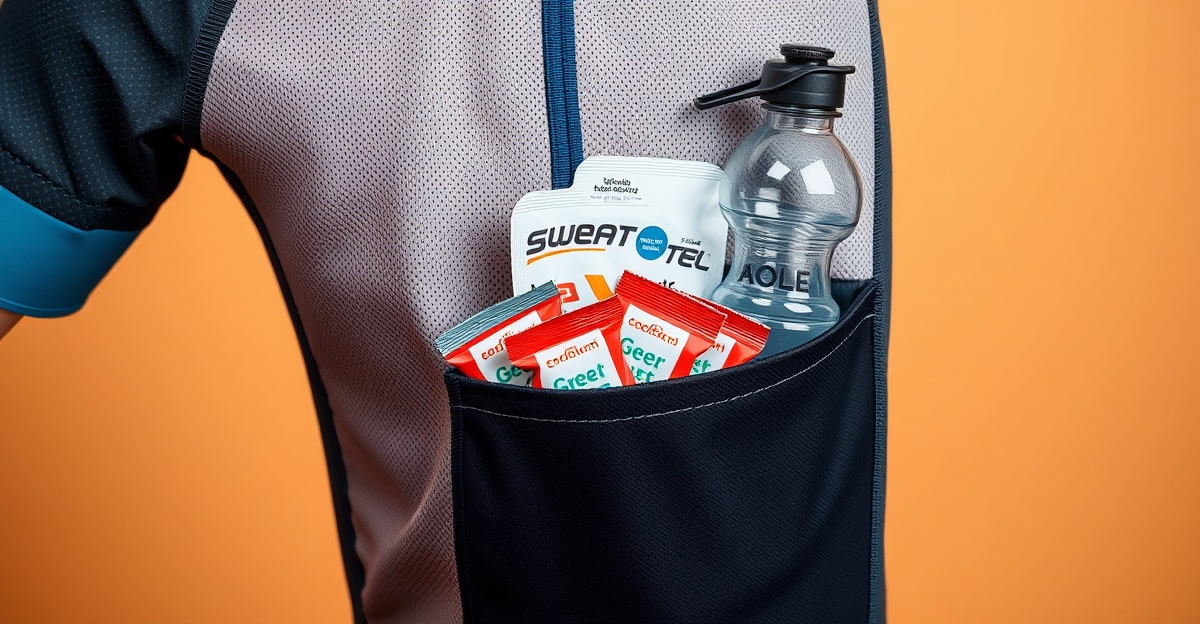
These two brands share almost no philosophy. Maurten was founded in Sweden in 2015 on a single idea: encapsulate carbohydrates inside a hydrogel so the gut wall never has to work against a high-osmolality bolus. Precision Fuel & Hydration has been operating out of the UK since 2004, built on a different premise: sodium losses during exercise vary so dramatically between individuals that a one-size product is a liability, not a solution. One brand bets on formulation chemistry. The other bets on personalisation. For most endurance athletes the choice comes down to which problem is actually limiting their performance: GI tolerance under high carbohydrate loads, or electrolyte mismanagement from unquantified sweat losses.
Brand Profiles
Maurten (2015, Sweden)
Maurten was commercialised from research into how alginate (a naturally occurring polysaccharide derived from brown algae) gels in the presence of calcium ions at gut pH. The resulting hydrogel matrix encapsulates the carbohydrate payload and passes through the stomach as a cohesive structure, only releasing its contents in the intestine where absorption is most efficient. The mechanism avoids the osmotic drag that high-concentration carbohydrate solutions produce in the stomach, which is the primary driver of nausea and bloating in athletes taking 60-90g of carbohydrate per hour.
Maurten's public positioning is deliberately minimal: no flavours, no long ingredient lists, no testimonial-heavy marketing. The brand counts Eliud Kipchoge, the INEOS Grenadiers, and Jumbo-Visma among its partners: athletes and teams who race at intensities where GI tolerance is the binding constraint.
The formulation uses a 0.8:1 maltodextrin-to-fructose ratio (Maurten labels this as 0.8:1; equivalent to glucose:fructose 1:0.8 in independent research), slightly below the 1:0.8 optimum that most GLUT5 transporter research converges on, though Maurten maintains the hydrogel encapsulation more than compensates through accelerated gastric emptying.
Precision Fuel & Hydration (2004, United Kingdom)
Precision Fuel & Hydration occupies a different part of the market. The company's core claim, and the service that distinguishes it from all competitors, is individualised sodium prescribing. The company offers a free online Sweat Test that produces a rough sodium-loss estimate from self-reported symptoms, and an Advanced Lab Sweat Test that uses a pilocarpine-stimulated patch method to measure actual chloride concentration in sweat. The result is a sodium loss rate in mg/litre from which athletes calculate their replacement needs per hour at a given sweat rate.
This matters because sweat sodium concentration varies from roughly 200 mg/L to over 2,000 mg/L between individuals, a tenfold range. A "salty sweater" losing 1,200 mg of sodium per litre at 1.5 L/hr needs to replace 1,800 mg of sodium per hour in hot conditions. No standard product covers that without a custom electrolyte plan. PF&H's products are engineered to be stacked: carbohydrate gels plus electrolyte capsules plus variable-strength drink mix, so each athlete can dial in their personal sodium target.
Endorsed athletes include Jonny Brownlee, Lucy Charles-Barclay, and Kristian Blummenfelt, all long-course triathletes competing in hot environments where sodium management directly determines performance and safety.
Philosophy: Universal vs Personalised
The philosophical divide matters practically. Maurten's bet is that GI tolerance is the primary limiting factor for most athletes at race intensity, and that hydrogel technology solves it universally regardless of individual variation. The product has no customisation: the Gel 100 is the Gel 100. One formula, one carbohydrate concentration, one sodium level per serving (40 mg).
PF&H's bet is that sodium is the variable that matters most, and that carbohydrate delivery is a solved problem adequately addressed by basic 2:1 maltodextrin-fructose formulations. The products have minimal innovation on the carbohydrate side (isotonic gels using standard ratios), while sodium is treated as a continuous variable requiring individual calibration.
Where the philosophies converge: both brands support high carbohydrate intake in the 60-120g per hour range that current exercise physiology recommends for efforts over two hours. Where they diverge: Maurten assumes a universal gut, PF&H assumes a universal carbohydrate tolerance but a highly individual electrolyte need.
For athletes who have never experienced significant GI distress during training, the Maurten premium is harder to justify. For athletes who have had races blown up by hyponatremia, cramping, or severe sweat-driven dehydration, the PF&H personalisation is the more direct intervention.
Formulation Comparison
Maurten: Hydrogel Encapsulation
Maurten's gels and drink mixes use a sodium alginate and calcium carbonate system to form a hydrogel at stomach pH. The stated mechanism is:
- The hydrogel matrix reaches the stomach intact, bypassing the osmotic loading that would otherwise slow gastric emptying.
- The matrix opens in the higher-pH environment of the small intestine, releasing maltodextrin and fructose for absorption via the SGLT1 and GLUT5 transporter system.
- The result is faster effective delivery of carbohydrate to working muscle with reduced GI burden.
Published research on Maurten specifically is limited, but supporting evidence exists for the general principle of reduced gastric osmolality improving carbohydrate delivery rates. A 2022 study in the International Journal of Sport Nutrition and Exercise Metabolism found no statistically significant difference in absorption rate between Maurten and a standard isotonic gel at 60g/hr, though Maurten users reported lower perceived GI discomfort — consistent with the company's claims about the gastric phase rather than the absorption phase.
The carbohydrate ratio across all Maurten products is a fixed 0.8:1 (maltodextrin:fructose). Sodium is present only as a minor osmotic buffer: 40 mg per gel and 230-460 mg per drink mix serving, well below any meaningful electrolyte replacement threshold.
Precision Fuel & Hydration: Standard Delivery, Variable Electrolytes
PF&H gels use a standard isotonic 2:1 maltodextrin-to-fructose ratio, well within the evidence-based optimum for dual-transporter carbohydrate delivery. The formulation is intentionally unremarkable. The company's competitive advantage is not in how carbohydrates are delivered but in the surrounding electrolyte system.
The PH 1500 drink mix contains 1,500 mg of sodium per litre, among the highest commercially available without a prescription. This is not designed as a general hydration product; it is designed to be diluted by the salty sweater who would become hyponatremic on standard sports drinks. The accompanying Electrolyte Capsules provide 250 mg of sodium per capsule and can be stacked to reach any target.
This stacking architecture is the key differentiator. An athlete with a measured sweat sodium concentration of 1,000 mg/L sweating at 1.5 L/hr in an Ironman environment needs approximately 1,500 mg of sodium per hour. That athlete can achieve the target with a combination of PH 1500 drink mix plus capsules, matched precisely to their sweat rate. No other brand offers this level of prescriptive flexibility.
Product Lineup and Specifications
The following table covers all active (non-discontinued) products from both brands with key nutritional data and pricing.
| Brand | Product | Category | Carbs (g) | Carb Ratio | Sodium (mg) | Caffeine (mg) | Price (USD) | Price/30g Carb (USD) |
|---|---|---|---|---|---|---|---|---|
| Maurten | Gel 100 | Gel | 25 | 0.8:1 | 40 | 0 | $3.90 | $4.68 |
| Maurten | Gel 100 Caf 100 | Gel (caffeinated) | 25 | 0.8:1 | 40 | 100 | $3.90 | $4.68 |
| Maurten | Gel 160 | Gel (high-carb) | 40 | 0.8:1 | 40 | 0 | $4.90 | $3.68 |
| Maurten | Drink Mix 160 | Powder | 39 | 0.8:1 | 230 | 0 | $3.50 | $2.69 |
| Maurten | Drink Mix 320 | Powder | 80 | 0.8:1 | 460 | 0 | $4.50 | $1.69 |
| Maurten | Bicarb System | Powder (alkaline) | 0 | — | — | 0 | $65.00 | — |
| Precision F&H | PF 30 Gel | Gel | 30 | 2:1 | 100 | 0 | $3.00 | $3.00 |
| Precision F&H | PF 90 Gel | Gel (high-carb) | 90 | 2:1 | 300 | 0 | $9.00 | $3.00 |
| Precision F&H | PH 1500 | Drink (high-sodium) | — | — | 1,500/L | 0 | — | — |
| Precision F&H | Electrolyte Capsules | Capsule | 0 | — | 250 | 0 | — | — |
Key pricing observations:
- The Maurten Gel 100 at $4.68 per 30g of carbohydrate is the most expensive gel in this comparison. That premium is the cost of the hydrogel technology.
- The Maurten Drink Mix 320 at $1.69 per 30g of carbohydrate is competitive, and for athletes who can tolerate drink mixes on the bike, it is the most cost-efficient delivery method from the brand.
- PF&H's PF 30 and PF 90 are identically priced at $3.00 per 30g of carbohydrate regardless of serving size: a straightforward cost structure.
- The PF 90 Gel at 90g of carbohydrate per packet is unusual in the market. For athletes targeting 90g/hr, a single gel covers the full hour's carbohydrate requirement, reducing the gel-taking burden significantly.
When Sweat Testing Matters More Than Hydrogel Technology
The case for prioritising Precision Fuel & Hydration's approach over Maurten's rests on one physiological reality: hyponatremia and severe dehydration from uncompensated sodium losses cause performance failure and medical emergencies that no carbohydrate formulation can fix.
Sweat sodium concentration is largely genetically determined and remarkably stable within an individual across conditions. An athlete who loses 1,500 mg of sodium per litre of sweat in cool conditions loses approximately the same concentration in hot conditions, though total losses increase with sweat rate. This individual ceiling matters in the following scenarios:
Long-course triathlon (Ironman, 70.3) in heat. A heavy sweater completing a 10-hour Ironman at 1.5 L/hr sweat rate with 1,200 mg/L concentration loses 18,000 mg of sodium during the race. Standard sports nutrition products, consumed at normal rates, might replace 3,000-5,000 mg. The resulting deficit produces hyponatremia, a condition where circulating sodium falls dangerously low, with symptoms including nausea, cognitive impairment, and in severe cases, seizure. This is a documented cause of DNFs and medical tent visits at every major long-course event, not a theoretical edge case.
Ultra-running and multi-stage events. Extended events where sweat accumulates over days amplify individual variation. Athletes who can "get away with" poor sodium management in a 2-hour race cannot in a 12-hour or multi-day event.
Heat-acclimation periods. Athletes who have recently moved to hot-weather training environments experience elevated sweat rates before full heat acclimatisation. During this window, sodium losses are highest and replacement needs are at their most critical.
For athletes in these categories, knowing their sweat sodium concentration via PF&H's lab test is quantifiably valuable. The $150-200 cost of the advanced sweat test buys data that determines sodium replacement strategy for all future training and racing. No hydrogel formulation addresses this gap. For detailed sodium guidance by sweat type, see the sodium per hour reference.
Use the TDEE & Macro Planner to calculate per-hour carbohydrate targets first. Once total carbohydrate need is established, sodium requirements can be layered on top using sweat test data.
When Hydrogel Technology Matters More Than Sodium Personalisation
The case for Maurten rests on a different physiological reality: the gut is a bottleneck at high carbohydrate intake rates, and reducing that bottleneck has a measurable performance benefit.
Research consistently shows that athletes who can tolerate 90g of carbohydrate per hour outperform those limited to 60g per hour in efforts over three hours. The performance gain from additional carbohydrate at high intensity is real and well quantified. The barrier to reaching 90g/hr is almost always GI tolerance rather than substrate availability. If the gut rejects the carbohydrate through nausea, bloating, or vomiting, it does not reach muscle.
Maurten's hydrogel technology addresses this directly in the following scenarios:
High-intensity effort where gastric emptying is suppressed. At threshold or above-threshold efforts (common in road cycling, marathon racing, and 70.3 run legs), blood is redistributed away from the gut toward working muscle. Gastric emptying slows. High-osmolality solutions accumulate and cause distress. The hydrogel, if it genuinely passes through the stomach as a lower-effective-osmolality package, should be less affected by this redistribution than standard gels.
Athletes with documented history of GI issues. If an athlete consistently experiences distress on other gels, particularly during hard efforts, and has not had distress on Maurten, the difference likely reflects the hydrogel mechanism. This is an observable within-subject comparison that implies the formulation is the causal variable.
Racing in cool conditions where sodium management is less acute. In cool, low-sweat-rate environments, total sodium losses over a race may be modest. A marathon runner completing a fall race in 12°C conditions at a moderate pace may lose only 500-800 mg of sodium in total. In that scenario, the electrolyte gap is manageable with standard products, and the primary limiting factor shifts to carbohydrate delivery. This is where Maurten's formulation earns its premium.
Athletes training at 90g/hr and above. Elite and serious amateur athletes targeting 90-120g of carbohydrate per hour, a level increasingly supported by gut-training research, may find Maurten's hydrogel the enabling technology. Start with the Macro Periodization Calculator to establish carbohydrate requirements across training blocks, then assess whether GI tolerance is the active constraint.
The Sodium Management Deep Dive
PF&H built its entire product architecture around a variable that most nutrition brands treat as a footnote. Understanding why requires a brief account of what sodium actually does during exercise.
Sodium is the primary extracellular ion. Sweat contains both water and sodium, but in proportions that vary by individual. When sweat sodium concentration is high relative to replacement, circulating sodium falls. This is hyponatremia. When water intake exceeds sodium intake relative to losses, the same dilution effect occurs. The symptoms are insidious because early-stage hyponatremia feels like dehydration: fatigue, nausea, weakness. Athletes experiencing this frequently drink more fluid, worsening the dilutional component.
The clinical relevance for endurance athletes: a 2016 study of Ironman finishers found measurable exercise-associated hyponatremia (EAH) in 12% of participants, with a subset exhibiting sodium levels below 130 mmol/L, a level associated with neurological symptoms. The athletes most at risk were those with long finishing times (greater exposure duration), higher fluid intake relative to losses, and high sweat sodium concentration.
PF&H's PH 1500 drink mix contains 1,500 mg of sodium per litre, the highest concentration available from a mainstream sports nutrition company. Standard sports drinks contain 200-600 mg/L. The recommendation from PF&H is to blend PH 1500 with water or lower-sodium products to reach an individual target, not to use it as a primary hydration drink. An athlete whose lab test reveals 1,200 mg/L sweat sodium and a 1.0 L/hr sweat rate in race conditions needs 1,200 mg/hr of sodium. Two 500 mL bottles of PH 1500 at full concentration deliver 1,500 mg — slightly above target. More commonly, athletes mix PH 1500 at 50-75% concentration and supplement with Electrolyte Capsules to fine-tune.
For the reference athletes — Brownlee, Charles-Barclay, Blummenfelt — racing full-distance triathlon events in hot conditions for 8-9 hours, this granularity is the difference between finishing and not finishing. The sweat testing infrastructure is what enables the prescribing. Without a known individual sodium loss rate, any sodium replacement strategy is guesswork.
Texture, Taste & Race-Day Logistics
The physiological case for each brand has been made. What is less often discussed is what it actually feels like to execute a fuelling strategy with these products over the course of a long race — and how sachet format, texture, and flavour load interact with performance when cumulative fatigue is highest.
Mouthfeel and Texture
Maurten Gel 100 and Gel 160 share a distinctive hydrogel consistency: firm, cohesive, and unlike any conventional gel format. The sachet contains a structure closer to a soft solid than a pourable liquid. It swallows without water and leaves no coating or aftertaste. The product is completely unflavoured by design. Athletes new to Maurten often describe their first experience as neutral to odd; athletes who have raced long distances on flavoured gels frequently describe it as a relief.
PF&H PF 30 Gel is isotonic in format: a mid-density syrup that flows readily and absorbs without additional fluid. It comes in flavoured variants including mixed berry and salted watermelon; the salted variants are notable because the sodium content in the gel itself is low (100mg per serving), making the flavour a nod to electrolyte expectation rather than a substitute for a sodium strategy. The salted watermelon variant in particular has a mild, non-cloying profile that holds up reasonably well over multiple doses.
PF&H PF 90 Gel is a substantially different physical experience. Each sachet delivers 90g of carbohydrate in a single 180g pouch, roughly equivalent to three standard gels in one unit. The sachet is noticeably syrupier in texture than the PF 30 and takes longer to consume during effort. Athletes who use the PF 90 typically do so in a deliberate pause at a transition or aid station rather than during continuous hard running. At Ironman cycling pace, the PF 90 is workable; on a marathon run leg at race effort, it requires more time and attention to consume than a smaller unit.
Sachet Size and Vest Logistics
Maurten Gel 100 sachets (approximately 40g) and Gel 160 sachets (approximately 65g) are compact and fit cleanly into standard race-vest front pockets or cycling jersey pockets. Five Gel 160s add roughly 325g and occupy a predictable, dense footprint.
The PF 30 Gel (approximately 60g per unit) is broadly comparable in physical size to other 30g-carbohydrate gels. Five PF 30 sachets fit into a standard vest configuration without logistical problems.
The PF 90 Gel, at 180g per unit, is a different category. A single PF 90 pouch is significantly larger than any Maurten gel and will occupy most of a standard race-vest front pocket on its own. For athletes targeting 90g of carbohydrate per hour and finding the one-per-hour simplicity of the PF 90 appealing, the logistical trade-off is carrying far fewer, much larger units. Two PF 90 sachets for a two-hour effort is manageable; five for a five-hour effort is not practical without vest pockets specifically sized for the format.
The practical upshot: PF 90 suits long-course athletes with crew access, bike-mounted storage, or special-needs bags rather than athletes who are self-sufficient from a single vest.
Flavour Fatigue at Distance
Maurten's tasteless design holds a specific advantage at ultra-distance efforts. By hour six, eight, or ten of an Ironman, when the priority is simply absorbing calories without triggering nausea, a product with no flavour, no sweetness, and no aftertaste removes one variable from a system already under considerable stress. Athletes racing at long-course triathlon pace consistently cite Maurten's lack of flavour as the primary reason for loyalty at distances where flavoured alternatives become hard to tolerate.
PF&H's gel products are flavoured, and the flavour load accumulates across repeated doses in the same way as other flavoured nutrition products. The salted watermelon variant of the PF 30 has a more subtle profile than aggressively sweet alternatives, and some athletes find the savoury-adjacent profile easier to sustain across multiple hours. The PF 90, consumed as a single large dose rather than a continuous drip of small sachets, distributes its flavour exposure differently — one larger hit per hour rather than a smaller hit every fifteen minutes — which some athletes find easier to manage cognitively.
For races under three hours, the flavour question is largely irrelevant. At marathon distance and shorter, both Maurten's neutrality and PF&H's flavoured options are equally serviceable, and the choice between them should rest on formulation, sodium, and logistics rather than on palatability.
Recommendation Framework
Choose Maurten if:
- GI distress at high carbohydrate intake rates is a documented problem (nausea, bloating, vomiting on other gels during hard efforts)
- Racing at high intensity in cool-to-moderate temperatures where sodium losses are manageable
- Carbohydrate targets are at or above 75g/hr and hydrogel delivery provides a tolerance margin
- Simplicity of product selection is a priority — one gel format, no customisation required
Choose Precision Fuel & Hydration if:
- Sodium management has been a problem in previous races (cramping, hyponatremia symptoms, late-race cognitive fog)
- Racing long-course events in heat (Ironman, 70.3, ultramarathon) where sweat sodium losses accumulate
- A confirmed or suspected "salty sweater" — white residue on skin or clothing after training, strong desire for salty foods post-exercise
- The PF 90 Gel's 90g-per-packet format is logistically attractive for reducing mid-race fuelling complexity
Consider both:
- High-volume athletes training in heat and racing at high intensity can use Maurten for carbohydrate delivery and PF&H's electrolyte system (capsules) for sodium management simultaneously. The products are not mutually exclusive. For guidance on how these two variables interact in practice, see the glucose-fructose ratio reference.
Frequently Asked Questions
Is Precision Fuel worth the cost?
PF&H gels are priced at $3.00 per 30g of carbohydrate — below Maurten's $3.68-4.68 range. The sweat testing service carries an additional cost, but the data it produces informs every future race and training session. For athletes with a history of sodium-related performance problems, the cost of the test is low relative to the value of the information.
What are the ingredients in PF 90?
The PF 90 Gel contains maltodextrin, water, fructose, pectin, citric acid, potassium sorbate, and calcium lactate. The formulation uses a 2:1 maltodextrin-to-fructose ratio consistent with dual-transporter research recommendations. The 90g carbohydrate per serving is delivered in an isotonic solution designed to absorb without additional water.
Does hydrogel actually work?
The mechanism is biologically plausible and Maurten's products have been adopted by elite athletes at the highest level of competition. Controlled studies showing statistically significant performance improvements versus non-hydrogel isotonic products at equivalent carbohydrate concentrations remain limited. The most consistent finding is reduced self-reported GI discomfort, a real benefit even without a measured performance effect, because GI distress at race intensity reliably reduces performance.
How does Maurten hydrogel work?
Sodium alginate in the gel reacts with calcium ions in the stomach's acidic environment to form a gel matrix. This matrix has lower effective osmolality than a dissolved carbohydrate solution of equivalent concentration, which reduces the osmotic signal that slows gastric emptying. In the small intestine, the higher pH environment causes the matrix to release its carbohydrate payload for absorption via the standard SGLT1 and GLUT5 transporter pathways.
When should you use Maurten gels?
Maurten gels are optimised for higher-intensity efforts where gastric emptying is suppressed and GI tolerance is most at risk. At low intensity (Zone 1-2), whole food and standard gels absorb efficiently and the hydrogel advantage is less relevant. The products are most valuable at threshold intensity and above: hard training sessions, race efforts, marathon running pace, and cycling efforts above 75% FTP.
What are the different grades of Precision Fuel?
PF&H offers PF 30 Gel (30g carbohydrate, $3.00 for 4 gels), PF 30 Caffeine Gel (30g carbohydrate plus 100mg caffeine), and PF 90 Gel (90g carbohydrate, $9.00 for 3 gels). The electrolyte range includes PH 1500 (1,500 mg sodium/litre), PH 1000, PH 500, and PH 250 at descending concentrations, plus Electrolyte Capsules at 250 mg per capsule for fine-tuning.
Can heavy sweaters use Maurten?
Maurten does not solve sodium management. An athlete with high sweat sodium concentration can use Maurten gels for carbohydrate delivery and supplement separately with PF&H electrolyte capsules or another high-sodium product. The two systems address independent physiological variables and are not in conflict.
Summary
Maurten and Precision Fuel & Hydration are not competing to solve the same problem. Maurten is solving gastric tolerance at high carbohydrate intake rates. PF&H is solving individualised sodium replacement in athletes with large or poorly quantified sweat losses.
The practical test: if an athlete's primary concern going into a long race is "will my stomach hold up?", Maurten's hydrogel addresses that directly. If the primary concern is "am I going to cramp, fade, or feel mentally off in the last hour?" and previous races suggest electrolyte management as the cause, PF&H's sweat test and product stack address that.
For athletes who have never had a problem with either variable, the decision simplifies to cost and logistics. PF&H is cheaper per 30g of carbohydrate. Maurten is simpler to source and carry.
Calculate per-hour carbohydrate requirements with the TDEE & Macro Planner and periodised intake across training blocks with the Macro Periodization Calculator. Once the carbohydrate target is established, the choice of delivery vehicle (and whether sodium personalisation is the next constraint to address) becomes a straightforward decision tree.