
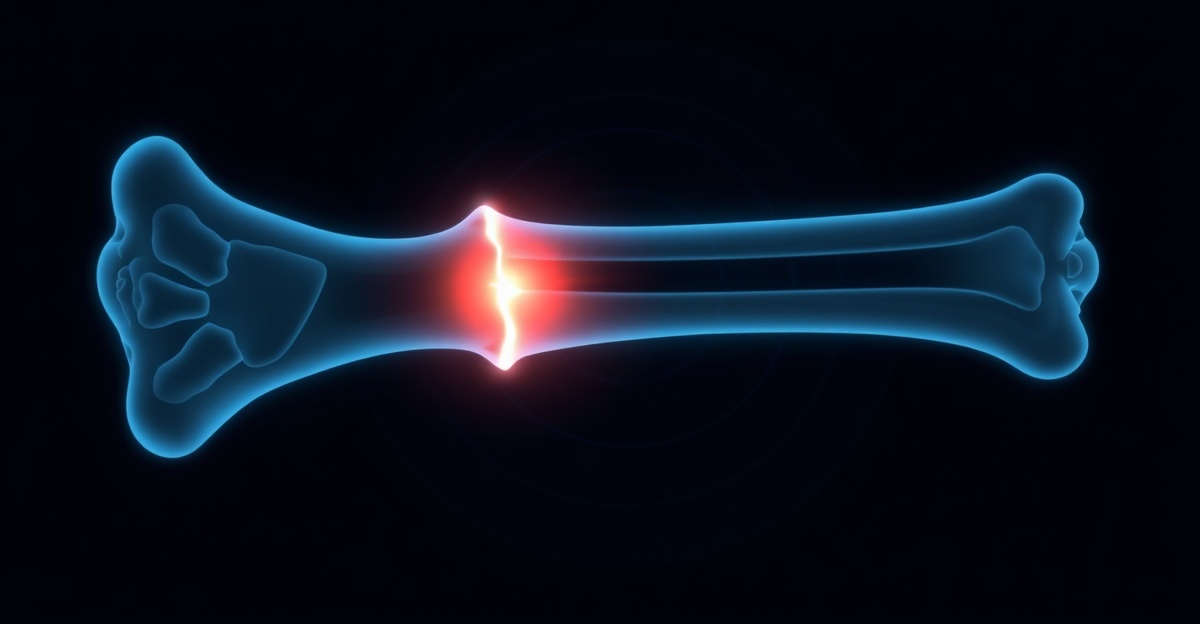
A stress fracture is one of the most frustrating injuries a runner can face — not because of the pain, but because of the enforced patience. You feel fine walking. You think you could run. But the bone is not ready, and pushing too early resets the clock to zero. This guide walks through recovery timelines for the four most common stress fracture sites in runners: tibial shaft, metatarsal, navicular, and femoral neck. Each follows a phased return-to-running protocol based on bone healing biology, not wishful thinking. This guide is for educational purposes only and does not replace medical advice. Always follow your surgeon's and physiotherapist's guidance.
Stress Fracture Types and Healing Timelines
Not all stress fractures are equal. The location determines the healing timeline, the risk of complications, and how aggressively you can cross-train during recovery.
| Fracture Site | Risk Level | Typical Healing | Return to Running |
|---|---|---|---|
| Tibial shaft (medial) | Low | 6–8 weeks | 8–12 weeks |
| Metatarsal (2nd–4th) | Low | 6–8 weeks | 8–10 weeks |
| Navicular | High | 8–12 weeks (often NWB) | 14–20 weeks |
| Femoral neck | High — surgical if displaced | 8–16 weeks | 16–24 weeks |
Low-risk fractures heal predictably with load restriction and time. High-risk fractures (navicular, femoral neck, anterior tibial cortex) can progress to complete fracture or non-union if mismanaged. These demand imaging follow-up and often strict non-weight-bearing phases.
Phased Return-to-Running Protocol
The return is not a single moment — it is a graduated process. Rushing any phase increases re-fracture risk significantly.
| Phase | Activity | Duration | Criteria to Progress |
|---|---|---|---|
| 1 — Protection | Non-weight-bearing or boot. Pool running, upper body work | 2–8 weeks (site-dependent) | Pain-free walking, imaging confirms healing |
| 2 — Walk | Progressive walking, 15–30 min daily. Bone loading exercises | 1–2 weeks | Pain-free walking 30+ min |
| 3 — Walk/Run | Walk 4 min / run 1 min, progress to walk 1 / run 4 | 2–3 weeks | No pain during or after, no next-day soreness at site |
| 4 — Easy Running | Continuous easy pace, max 30 min, every other day | 2–4 weeks | Comfortable at 30 min, no site tenderness |
| 5 — Build | Add 10% volume per week. Introduce tempo after 2 weeks | 4–6 weeks | Running 70% of pre-injury volume pain-free |
| 6 — Race Prep | Sport-specific intensity, intervals, race simulation | 2–4 weeks | Full training load tolerated |
The walk/run phase is where most runners fail. It feels absurdly easy. That is the point. The bone is adapting to impact loading, and the progression must respect that biology regardless of your cardiovascular fitness.
Cross-Training During Recovery
The goal during the protection phase is to maintain cardiovascular fitness without loading the fracture site. Pool running is the gold standard — it replicates running biomechanics without impact and preserves VO2max remarkably well. Research shows runners who aqua jog 5–6 times per week during a 6-week layoff lose less than 3% of their VO2max.
Cycling is generally safe for tibial and metatarsal fractures after the acute phase, but check with your physio first — the repetitive dorsiflexion can irritate some metatarsal fractures. Swimming is universally safe but does not transfer well to running fitness.
Use the Training Zones Calculator to set heart rate targets for cross-training. Match the intensity distribution you would use in running (80% easy, 20% moderate-to-hard) to maintain your aerobic engine without the impact.
Preventing Recurrence
Up to 20% of stress fractures recur within a year if the underlying cause is not addressed. The most common contributing factors for runners are training load errors (too much, too fast), low energy availability (not eating enough for the training volume), low bone mineral density, and biomechanical issues.
- Training load: Use the Training Load Calculator to monitor weekly load and avoid spikes above 10% per week during the return phase
- Nutrition: Ensure adequate calcium (1000–1300mg/day) and vitamin D (1000–2000 IU/day). Relative Energy Deficiency in Sport (RED-S) is a major risk factor — if you are undereating, your bones pay the price
- Bone loading: Plyometrics and impact exercises (hopping, jumping rope) build bone density once the fracture is fully healed. Start with low-volume, bilateral hops and progress over 8–12 weeks
- Footwear: Replace running shoes every 500–800km. Worn-out midsoles lose shock absorption and increase bone stress
Stress fracture recovery is a test of discipline, not fitness. The runners who come back strongest are the ones who respect the timeline, cross-train intelligently, and address the root cause before they lace up again. Use the phased protocol, monitor your training load, and let your AI training plan rebuild your volume at a rate your bones can handle.